Most hospital staff don’t think much about medical gas hoses until a problem occurs. These hose assemblies deliver oxygen, medical air, vacuum, nitrous oxide, and other gases that support patient care every day.
Over time, continuous use and cleaning procedures can affect the hose functioning. Unnoticed damage causes leaks, compliance concerns, and unexpected repair costs.
Fortunately, there are usually warning signs before a hose fails. These signs tell you need a medical gas hose repair program.
Many healthcare facilities benefit from Broward Medical’s structured hose repair program. We offer industry standard services for inspection, testing and documentation of medical hoses. Our professionals are even trained to offer preventive maintenance to keep systems operating safely.
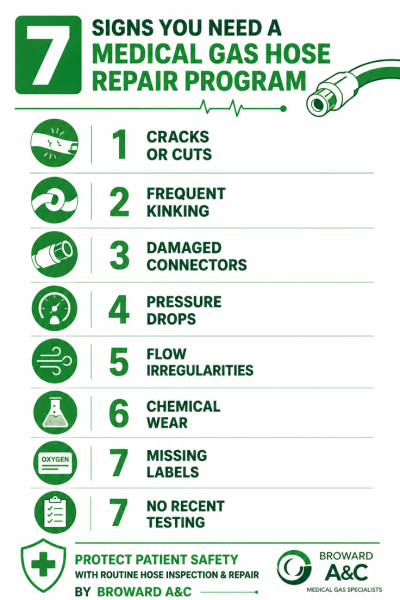
Signs You Need Immediate Medical Gas Hose Repair
- Cracks or Surface Damage
Over time, hoses develop visible cracks and cuts. Worn outer jackets of a hose mean it cannot provide reliable service.
- Frequent Kinking
Repeated kinking can restrict gas flow and weaken the hose structure over time.
- Damaged Connectors
Loose hose fittings can affect performance and create leak risks.
Connector issues are a common reason hospitals send hoses in for repair.
We offer repair of DISS, Ohmeda, Chemetron, and Puritan-Bennett connection systems. During repair, our technicians check the hose assembly and connector compatibility. We make sure the hose continues to function properly with existing wall outlets, booms, pendants, and clinical equipment.
- Pressure or Flow Issues
Inconsistent gas delivery may indicate hose-related problems. Contact our hose repair professionals if you notice unexpected pressure drops and alarms.
- Signs of Chemical Degradation
Hoses get brittle due to the use of cleaning agents and disinfectants. If you notice any sign of discoloration then it’s time for hose repair or replacement.
- Missing Labels or Identification
Faded gas identification labels create safety and compliance concerns, particularly in areas using multiple gas services.
- No Recent Inspection or Testing
If a hose has been in service for years without inspection or certification, chances are high it has hidden deterioration.
Some hospitals use hoses for years without formal inspection records. Those hoses may fail during compliance reviews or facility audits.
Sign up for our medical gas hose repair program which includes leak testing, performance verification, and service documentation. With us, facilities can have a clear record of maintenance activities. These records are proof of your compliance efforts.
What a Medical Gas Hose Repair Program Should Include
A quality hospital medical gas hose repair program should include services beyond fixing damaged hoses. It should help healthcare facilities maintain compliance and documentation throughout the hose lifecycle.
Essential Services Included in a Medical Gas Hose Repair Program
| Program Element | Purpose |
| Hose Inspection | Identifies cracks, wear, kinking, and signs of deterioration |
| Leak Testing | Verifies safe gas delivery |
| Connector Repair | Restores damaged fittings |
| Performance Verification | Confirms proper pressure and flow characteristics |
| Gas-Specific Labeling | Maintains safety and compliance |
| Documentation & Certification | Supports audits, inspections, and recordkeeping |
| Preventive Maintenance | Reduces equipment downtime |
Support for Multiple Medical Gas Services
Hospitals often use a variety of hose assemblies, including:
- Oxygen
- Medical Air
- Vacuum
- Nitrous Oxide
- Nitrogen
- Carbon Dioxide (CO2)
- Instrument Air
- Waste Anesthetic Gas Disposal (WAGD)
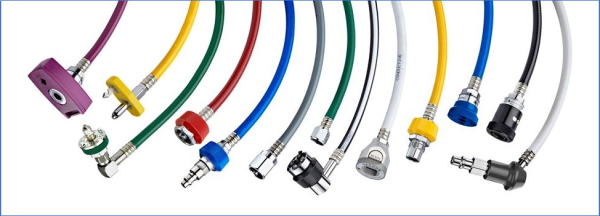
Each hose must be matched to the correct gas service, pressure requirements, and connection type.
Compliance and Safety Requirements
Medical gas hoses should meet applicable NFPA 99, CGA, and local healthcare code requirements.
This includes:
- Leak-free performance
- Proper gas-specific labeling
- Infection-control compatibility
- Certification and testing
- Conductive hose assemblies for operating rooms and wet locations
Compatibility with existing equipment
Hospitals often operate a mix of equipment from different manufacturers. Hose assemblies must be compatible with existing wall outlets, booms, pendants, and medical equipment.
Common connector styles include:
- DISS
- Ohmeda
- Chemetron
- Puritan-Bennett
Improperly matched connectors can create operational and safety concerns.
Documentation and Traceability
Many facilities overlook documentation until an inspection or compliance audit occurs.
A comprehensive hose repair program should provide:
- Service records
- Testing documentation
- Certification reports
- Traceable repair history
These records help biomedical and facilities teams demonstrate compliance and manage equipment more effectively.
Minimizing Downtime
A structured hose repair program reduces disruptions to patient care areas.
Departments may be forced to take equipment out of service when a medical gas hose fails. Their work stops until repairs are completed.
That downtime places additional strain on staff at busy healthcare facilities.
Broward Medical’s Hospital Medical Gas Hose Repair Program is designed to minimize disruptions through fast turnaround times.
Our repair services, replacement options, and preventive maintenance support are the best in the industry for hose issues. Choose us if you also want to avoid emergency situations and maintain continuity of care.
Get in touch with us to learn more about planned maintenance schedules in our Hospital Medical Gas Hose Repair Program.
What happens during a medical gas hose repair service?
Conductive hoses are designed for operating rooms and wet locations. Then, there are non-conductive hose assemblies suitable for other healthcare areas.
A qualified repair program means proper identification of the appropriate hose type, pressure rating, and configuration for each application. Testing is based on compatibility with infection-control practices and cleaning protocols.
Depending on the application, repair services may include:
- Inspection of hose assemblies and fittings
- Replacement of worn or damaged connectors
- Leak testing and performance verification
- Verification of gas-specific labeling
- Hose recertification and documentation
- Replacement of hoses that cannot be safely repaired
Healthcare facilities prefer when these services be available through a single provider. At Broward A&C, we simplify maintenance and ensure your medical gas systems remain reliable.
Benefits of a Dedicated Hospital Hose Repair Program
Managing medical gas hoses on an as-needed basis often leads to unexpected repairs and equipment downtime. A dedicated hospital hose repair program provides a more proactive approach.
Facilities can benefit from:
- Scheduled hose inspections
- Fast repair and replacement services
- Support for oxygen, medical air, vacuum, nitrogen, WAGD, and other gas services
- Compatibility with DISS, Ohmeda, Chemetron, and other connector types
- Compliance testing and certification
- Service documentation for audits and recordkeeping
- Preventive maintenance options designed to reduce unexpected failures
Some facilities also implement hose tracking systems and staff training programs as part of their maintenance efforts.
Beyond repairs, many healthcare organizations are moving toward proactive hose management.
Our preventive maintenance plans and hose tracking systems schedule inspections for the biomedical and facilities teams. Connect with us to identify problems before they lead to downtime.
Choose our hose repair programs to extend hose life and improve compliance documentation. With expert help, you can reduce the likelihood of unexpected failures in critical care environments.
Conclusion
Medical gas hoses experience constant use and movement throughout their service life. Recognizing early warning signs is important. However, having a structured repair and maintenance program in place is even more valuable.
If your facility needs certified medical gas hose inspections, repairs, testing, or preventive maintenance support, contact our team today. Choose Broward A&C for a hospital medical gas hose repair program tailored to your healthcare environment.
FAQS
How do I know if a medical gas hose needs repair or replacement?
Visible cracks, worn outer jackets, damaged fittings, missing gas labels, and recurring pressure issues are all signs that you need immediate hose evaluation. A qualified technician at Broward A&C can inspect the assembly of your medical hose systems. After inspection, we tell if it can be safely repaired or if replacement is the better option.
Can medical gas hose connectors be repaired without replacing the entire hose?
Yes, repairing is a good option if the hose itself is still in good condition. At Broward A&C, we can repair or replace damaged DISS, Ohmeda, Chemetron, or Puritan-Bennett connectors. The assembly should then be tested to confirm proper performance and compatibility with existing equipment.
Why is documentation important for medical gas hose repairs?
All the repair records and testing reports are crucial proof of hose maintenance. You will need these records during inspections, audits, and accreditation reviews. Make sure documentation is important in the hose maintenance program you choose. If interested, you can contact Broward A&C for the medical gas hose repair program.
What happens during a medical gas hose inspection?
Our qualified technicians will examine the hose for physical damage, check fittings and connectors, verify gas-specific labelling, and perform leak and performance testing. We identify problems related to safety and compliance.
Is a preventive maintenance program better than repairing hoses only when they fail?
We advise healthcare facilities to schedule inspections and maintenance regularly. This way problems can be found before they cause equipment downtime. A preventive approach with maintenance records is better to avoid unexpected service interruptions.

Recent Comments